
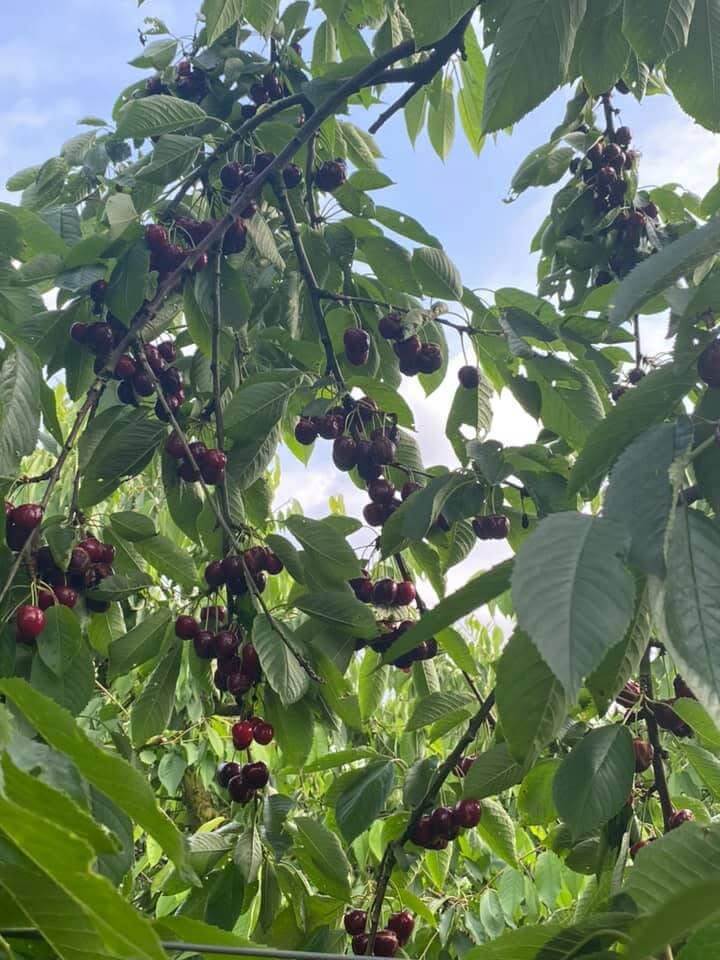
- In Belgium, cherry season runs from mid-June to the end of July, sometimes into early August for the latest varieties
- The heart of the season is July
- Each variety has its turn: Burlat opens the season in early June, Regina closes it in July
- Dates shift every year depending on spring weather
- Here at Fernelmont, we mainly grow Regina and we open the orchard on 27 June 2026 🍒
- A picked cherry won't ripen further: pick it fully ripe, never early
"So, when can we come picking?" The cherry season in Belgium is THE question we get every spring, by message or phone, sometimes right at the orchard gate 🍒 Short answer: mid-June to the end of July. The full answer, variety by variety with the real reasons dates move around, is just below.
When does cherry season start in Belgium? 📅
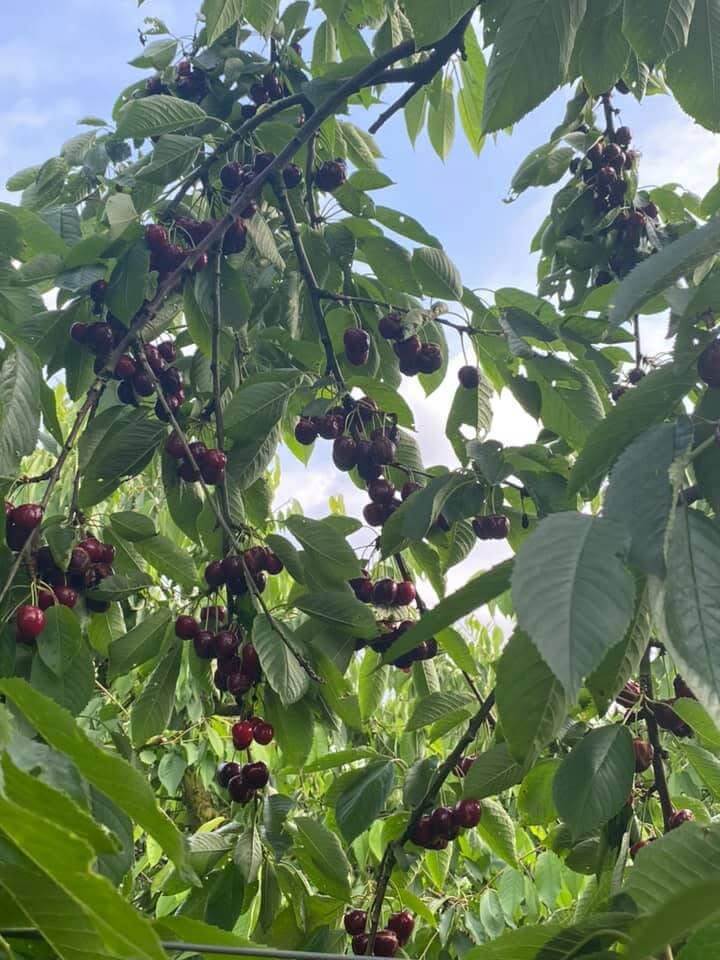
In Belgium, the first cherries arrive around mid-June, and the season runs through to the end of July. The latest varieties sometimes hold on into the very start of August. The peak, when the trees are laden with fruit, falls right in the middle of July.
It's short, and that's normal: the cherry is a summer fruit in a hurry. Six to seven weeks, all told. Belgium still produces impressive quantities though, with over a thousand hectares of cherry trees, and the country's main auction house shifts millions of kilos every summer. But once ripe, a cherry won't wait. That's exactly why knowing the calendar helps you show up at the right moment.
The variety calendar, from earliest to latest 🍒
Not all cherries ripen at the same time, which is a good thing: it spreads the season out. Nurseries and the CTIFL (the French technical reference body) classify varieties by a simple benchmark, the number of days after Burlat, the early-season reference cherry. The higher the number, the later the variety.
Here are the main varieties grown in Belgium and northern Europe, from earliest to latest:
| Variety | Ripening (vs Burlat) | When in Belgium | Good to know |
|---|---|---|---|
| Burlat | the reference (day zero) | early June | The classic early variety. Tender and sweet, but fragile. |
| Folfer | + 7 to 13 days | during June | Firmer than Burlat. |
| Summit | + 15 to 22 days | mid-June | Very large fruit (28 to 32 mm). |
| Van | + 16 to 24 days | mid to late June | Good firmness, but splits quickly in rain. |
| Kordia | ± 3 weeks | late June / early July | Large calibre and very firm, the export favourite. |
| Lapins | + 22 to 29 days | late June / early July | Self-fertile, no neighbour variety needed to produce. |
| Hedelfingen | + 23 to 27 days | late June / early July | A proven older late variety. |
| Regina | + 28 to 35 days | late June / mid-July | Very firm, holds up beautifully in the rain. Our variety. |
| Sweetheart | + 30 to 35 days | July | Self-fertile, one of the last varieties of the season. |
A quick note on vocabulary: all these varieties are bigarreaux, meaning firm, crunchy-fleshed cherries. It's an old French classification that sets them apart from guignes, soft and juicy cherries better suited to jams and spirits. If you want the full breakdown of each variety and its uses, we wrote a complete guide to cherries.
Regina, our variety 🍒
Here at the orchard, we mainly grow Regina, and there's a reason for that. It's a late variety, born at the Jork fruit research station in Germany, from a cross between Schneiders Späte Knorpelkirsche and Rube. It ripens about a month after Burlat, placing it right at the core of our season.
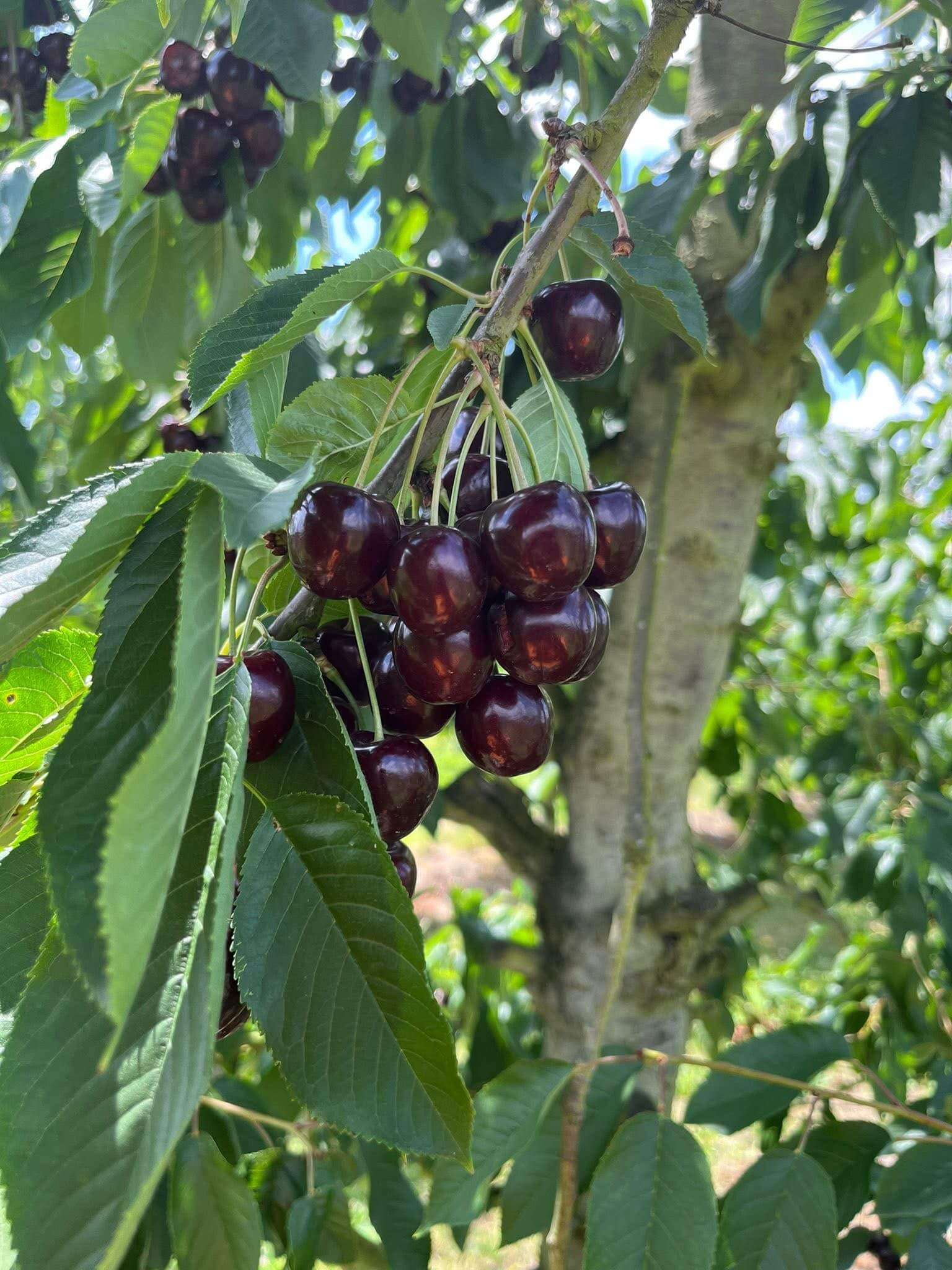
What makes it so valuable under Belgian skies is its resistance to splitting. The CTIFL technical sheet rates it "very low sensitivity" to cracking, one of the best scores of any variety. In practice: when a July storm hits the orchard, Regina holds up where other varieties would burst on the tree. For a climate as rainy as ours, that's worth its weight in gold.
Add a firm, dense flesh and a beautiful deep red colour, and you have a cherry that's great to eat on the spot or to use in the kitchen. The one constraint: Regina is self-sterile, it can't pollinate itself. So we plant other varieties nearby to let the bees do their job 🐝
Why the dates change every year 🌦️
If we never give you a date set in stone, it's because we're not the ones deciding. That's nature's call.
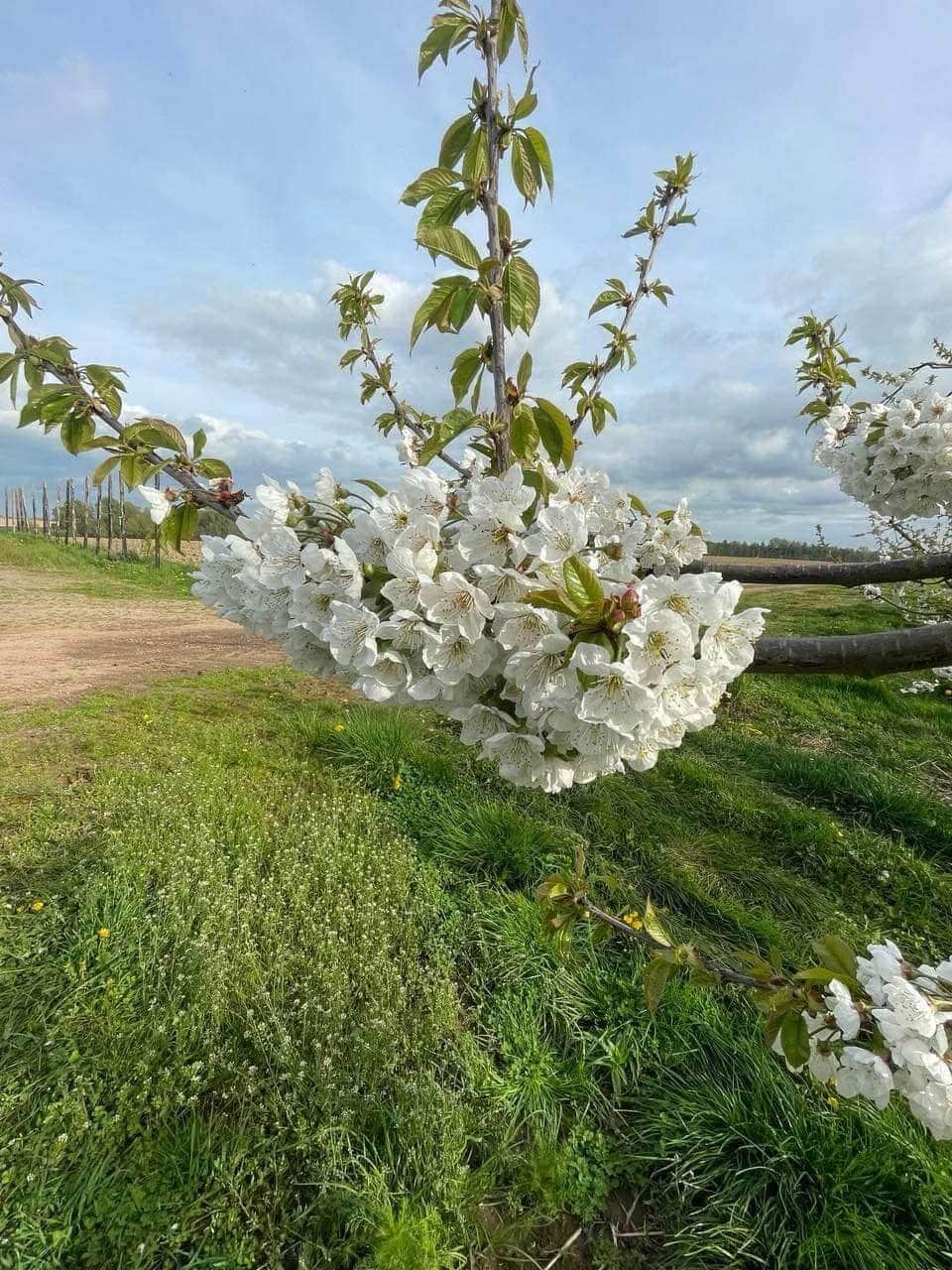
Everything plays out in spring. A mild April makes the trees flower earlier, and the harvest moves up accordingly. A late frost hits the blossoms, and part of the future harvest is gone: cherry buds start to suffer at -2 °C. June rain also plays a role: too much water just before picking and some varieties split on the tree (another area where Regina performs better than the rest).
That's why a season can open mid-June one year and early July the next. We keep a close eye on our trees and announce the opening date as soon as we're sure.
How to tell if cherries are ripe? 👀
The most reliable sign is colour. A ripe cherry deepens noticeably, and a ready Regina turns to a deep, almost burgundy red. It's not just about looks: the sugar rises as the colour darkens. The darker, the sweeter.
The second test is taste. A ready cherry is genuinely sweet, never tart. Try one from each tree before filling your basket, because ripeness varies from one tree to the next.
And something most people don't know: a cherry won't ripen once picked. Unlike a peach or a banana, it won't improve on the kitchen counter. The science is clear: no ethylene, no post-harvest ripening. Hence the golden rule at the orchard: pick cherries fully ripe, never early hoping they'll finish at home. And since a tree's ripeness window only lasts a few days, don't wait too long once the season is open 😉
The 2026 season at Fernelmont 🏡
This year, we open the orchard gates on 27 June 2026. With our late Regina, you'll land right in the sweet spot for full, fleshy cherries.
Our hours during the season:
- Monday to Friday: 3-7pm
- Saturday and Sunday: 10am-6pm
The idea is simple: you pick, we weigh, you pay by the kilo. And if you leave with kilos of cherries, think about freezing them or browse our easy recipes to enjoy them all winter.
Since the opening date can shift from one year to the next, check our self-picking page, kept up to date, before you head out.
Frequently asked questions ❓
When is cherry season in Belgium?
From mid-June to the end of July as a rule, with a peak in July. Late varieties like Regina can hold on into early August.
Which month is best for picking cherries?
July is the safest bet, with the most fruit on the trees. June works for early varieties like Burlat.
How long does cherry season last?
Six to seven weeks at most, across all varieties combined. For any single variety, the picking window is only a few days, so don't hang around once the season is open.
Which cherry variety ripens latest?
Among the common ones, Sweetheart and Regina close out the season in July. Regina is exactly the variety we grow at Fernelmont.
Is the season the same everywhere in Belgium?
More or less, yes. The mid-June to late July window applies across Belgium, with slight variations by region and local weather.
Come pick your cherries in Fernelmont! 🍒
You pick, we weigh, you pay by the kilo. Simple!
Discover self-picking- Variety data (ripening, firmness, splitting resistance): CTIFL cherry variety database
- Cherry ripening and non-climacteric fruit: Washington State University, Sweet Cherry Harvest
- Belgian season and production: RTBF, Belgische Fruitveiling